
Have your dentures stopped fitting securely on your arches, making it difficult to use them to eat, speak, and smile? Unfortunately, although your restorations were designed to stay in place using natural suction, if they’ve become older or worn, they could become hard to keep in place. Thankfully, denture adhesives can help keep your prosthetics stable until you can have them evaluated by your dentist. In the meantime, here’s how you use these products, and why relying on them should never be a long-term solution.
Should I Try Denture Adhesive?
Denture adhesive is a bonding material that helps to keep your restorations in place temporarily. Because many types contain a mineral called zinc, they are not recommended for long term use. That’s because although in small quantities zinc is usually harmless, if you ingest too much you could experience dangerous side effects like nerve damage. Thus, if you notice any strange symptoms such as numbness or tingling in the mouth, discontinue use immediately.
There are three main types of denture adhesive: powder, strips, and cream. Here’s a closer look at proper use for each. Please note that all products should be applied to dentures that have been completely cleaned first.
Denture Adhesive Powder
Step One: Wet your dentures with tap water.
Step Two: Lightly spray the denture adhesive powder on each part of the denture that will touch your gums and the roof of your mouth.
Step Three: Wet your mouth with water.
Step Four: Shake off any loose powder from the denture.
Step Five: Put your denture in place in your mouth and bite down on it to secure it into place.
Denture Adhesive Strips
Step One: Using clean, dry hands, peel the adhesive strips out of their packaging and cut them to fit your restorations.
Step Two: Wet the adhesive strips, and lay them carefully on your clean, dry denture. Don’t overlap the strips or allow them to hang over the edges.
Step Three: Moisten your mouth with water, and press the denture into your mouth, biting down to secure it.
Denture Adhesive Cream
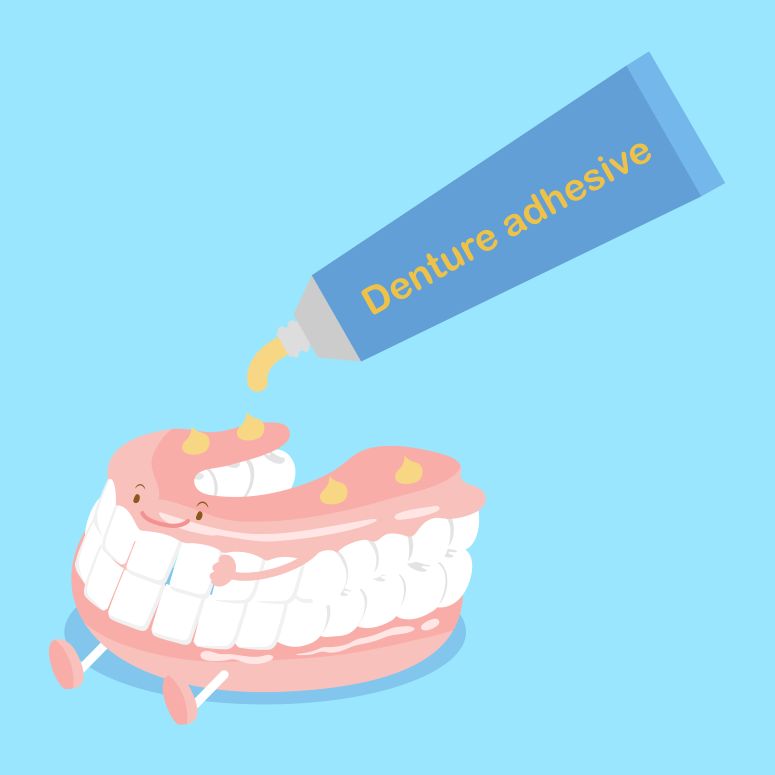
Step One: Gently squeeze the tube to apply the denture adhesive cream to the inside of your denture in short strips, avoiding the edges. Apply as conservatively as possible to prevent it from oozing out the sides.
Step Two: Moisten your mouth with water.
Step Three: Put your denture in your mouth and bite down on it for several seconds to secure it in place.
Coming Clean: How to Clean Adhesive off Your Dentures
Denture adhesives should make it easier to keep your dentures in place for an entire day. However, when you’re ready to stop wearing them for the night, it’s important to clean them off completely. To remove, simply swish some warm water in your mouth and then gently pull the restorations out and put them somewhere safe.
Next, brush your gums with a soft bristled toothbrush to clear any adhesive residue out of your mouth. Once clean, use another soft bristled toothbrush to scrub the entire denture with either unscented hand soap or a denture cleansing product. Floss between each tooth and rinse your restoration well before carefully submerging it in a glass of water.
Remember, denture adhesives are a temporary fix to a permanent problem. Should you find yourself relying on them frequently, this is an important sign that it’s time to visit your dentist to have your restorations examined, as they may need to be relined or replaced.
About Our Practice
At Associates in Dental Health of Haverhill, Dr. Koleini, Dr. Arakelian, and Dr. Sucre want you to have a beautiful, healthy, secure smile with the help of durable, lifelike dentures. If your restorations aren’t fitting the way they should, temporary fixes like denture adhesives can help – but not for long. Don’t put your health at risk while struggling to keep your teeth in place. Contact us today to schedule a consultation for dentures by visiting our website or calling 978-372-6800.